Manage AI agents like critical software

The AI management Challenge
Everyone Talks About AI Agents. Nobody Talks About Running Them.
Customer behavior shifts, policies evolve, and edge cases emerge daily. Yet moving your business logic into a live agent — and changing it safely — is still a high-friction, high-anxiety process. These are the five pains operations teams live with right now.
01
The Business Logic Bottleneck
AI operates within defined scopes. Off- policy requests are escalated or blocked, and alerts fire automatically.
02
"Live Wire" deployment anxiety
Input is grounded and sanitized before it reaches the model. Layered safeguards and supervision prevent injection.
03
The "Stale Knowledge" crisis
Continuous-learning changes require approval. Every decision and recommendation is audited.
04
The Build-Measure-Fail loop
Every agent is versioned with one-click rollback. Continuous evaluations prevent regressions.
05
The ROI blindspot
Inference-only. Never shared across customers. Retention, export, and delete are fully configurable.
There's a better way tooperate production AI.
Meet Agent Harness
Enter Agent Harness
The Development Lifecycle forevery AI Agent
Customer behavior shifts, policies evolve, and edge cases emerge daily. Yet moving your business logic into a live agent — and changing it safely — is still a high-friction, high-anxiety process. These are the five pains operations teams live with right now.
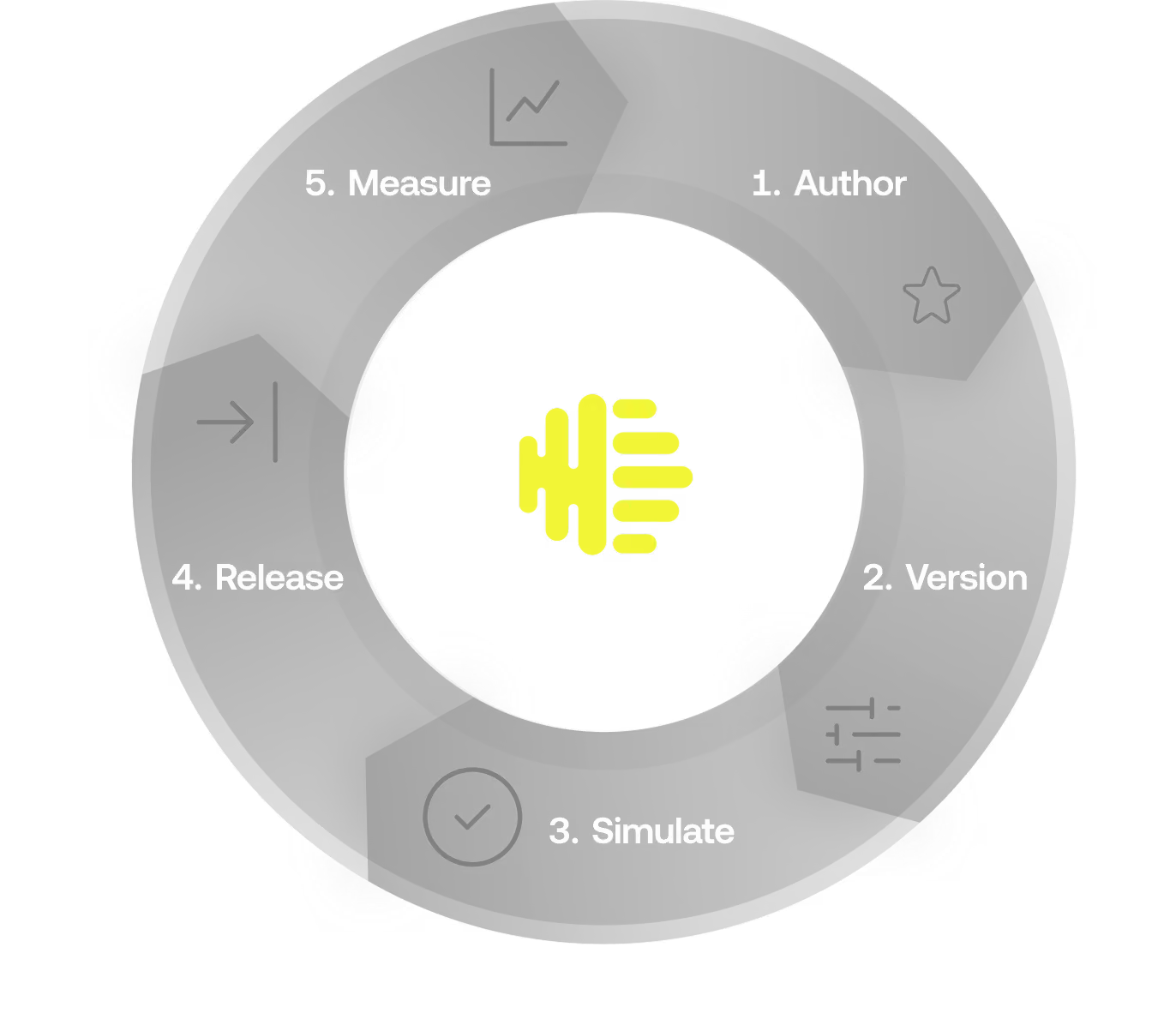
1. Author
AI CoBuilder turns governed SOPs into working agent drafts — in plain English.
2. Version
Safe Workspaces isolate every change. Full diff, full history — never touching production.
3. Simulate
Hundreds of synthetic conversations run against the workspace before a single real call sees it.
4. Release
A/B split traffic, expand incrementally, and roll back in one click if numbers dip.
5. Measure
Every interaction ties to the exact version that handled it — improvement is always provable. And new learning can be fed back into AI CoBuilder.
Section Heading to edit from right side panel
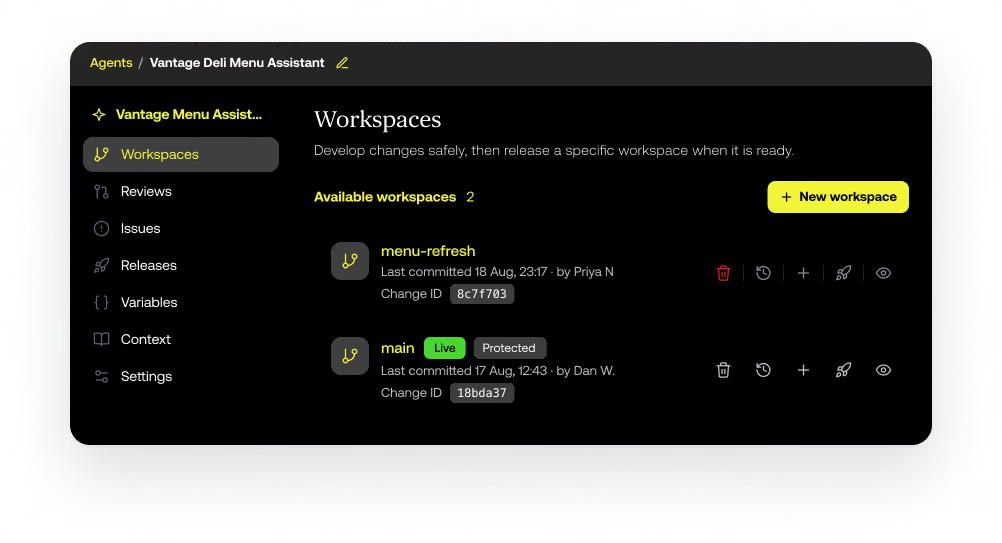
You wouldn't push changes straight to a live IVR or CRM workflow. Agents deserve the same discipline. Safe Workspaces give builders a fully isolated copy of an agent to experiment in — with zero impact on the version answering real calls.
Edit safely. Prompt logic, policy rules, workflow steps, fallbackbehavior, and knowledge references — all without touching production.
See every change side by side. Track exactly how a tweak altersintent handling, routing, and escalation before it ships.
Role-based approvals. Promote updates through reviewworkflows so every adjustment is checked for compliance and accuracy first.
Section Heading to edit from right side panel
Approved changes don't have to be all-or-nothing launches. Release from a specific workspace to a sliver of live traffic, watch the real-world numbers, and expand only when the data earns it. If something slips, recovery is a single click.
Phased traffic. Test a new auth step or routing rule on a smallpercentage before expanding across the contact center.
Documented releases. Tag every release with a description andattach evaluation results to prove operational readiness.
Version-level traceability. Every interaction is tied to the versionthat handled it — trace any anomaly to the exact release,workspace, and change that caused it.
Section Heading to edit from right side panel
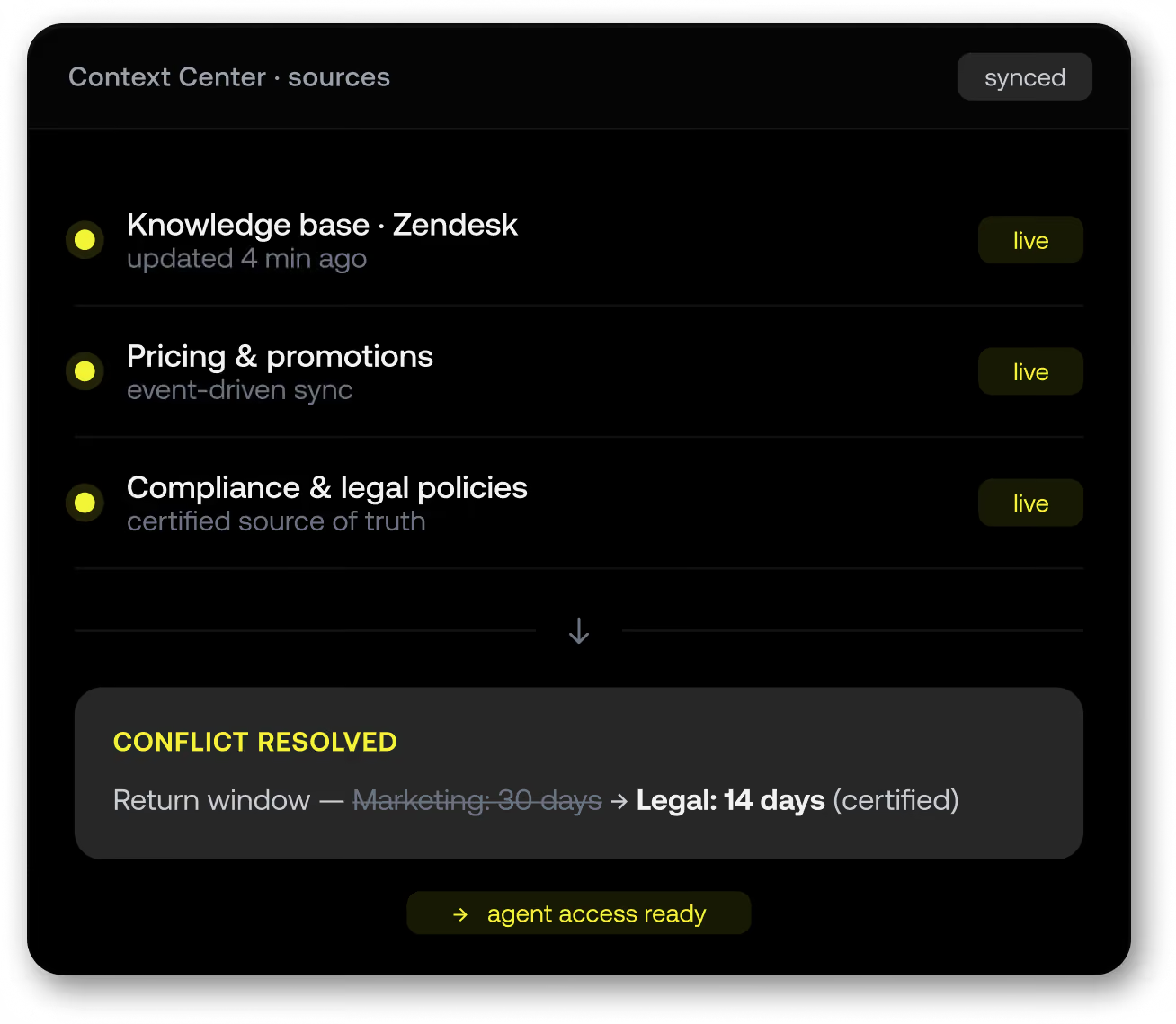
Dumping PDFs into a basic RAG system retrieves text from ungoverned data opening risk for stale numbers, conflicting definitions, and content a user shouldn't receive. The Context Center resolves definitions, lineage, and access policies before retrieval, keeping every agent synced to a single source of truth.
Active knowledge syncing. Event-driven sync with sourcesystems — when a human updates a policy, the agent has it immediately. No stale uploads.
Human guidelines to agent logic. Translates ambiguous SOPsinto explicit, machine-executable routing trees and fallback behavior.
Conflict resolution & governance. Marketing says 30 days, but Legal says 14? The Context Center enforces one certified answer.

Section Heading to edit from right side panel
Approved changes don't have to be all-or-nothing launches. Release from a specific workspace to a sliver of live traffic, watch the real-world numbers, and expand only when the data earns it. If something slips, recovery is a single click.
Phased traffic. Test a new auth step or routing rule on a smallpercentage before expanding across the contact center.
Documented releases. Tag every release with a description andattach evaluation results to prove operational readiness.
Version-level traceability. Every interaction is tied to the versionthat handled it — trace any anomaly to the exact release,workspace, and change that caused it.
.avif)
Section Heading to edit from right side panel
The old loop was build, measure, fail: you found out an agent was broken only after it frustrated a real customer. Proactive Quality flips it. Every workspace change runs through automated evaluations and simulated conversations before it's ever allowed near production traffic.
Automated test suites. Run hundreds of simulatedconversations against a workspace version and score them with LLM-as-a-judge.
Coverage beyond the happy path. Probe identity, compliancedisclosures, edge cases, and escalation — the scenarios that actually break.
Release gating. Promotion is blocked until regressions areresolved — so failing behavior never reaches a customer.
Section Heading to edit from right side panel
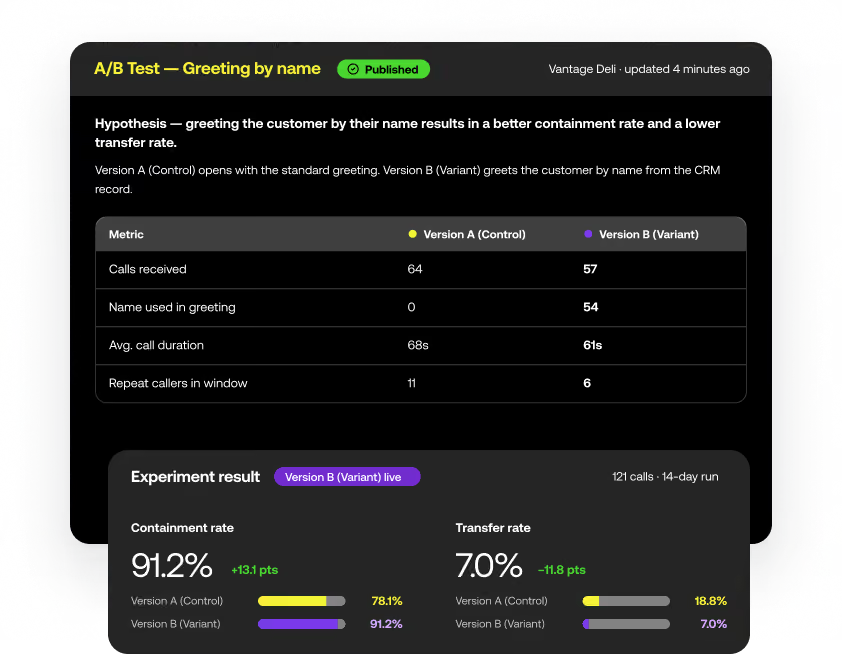
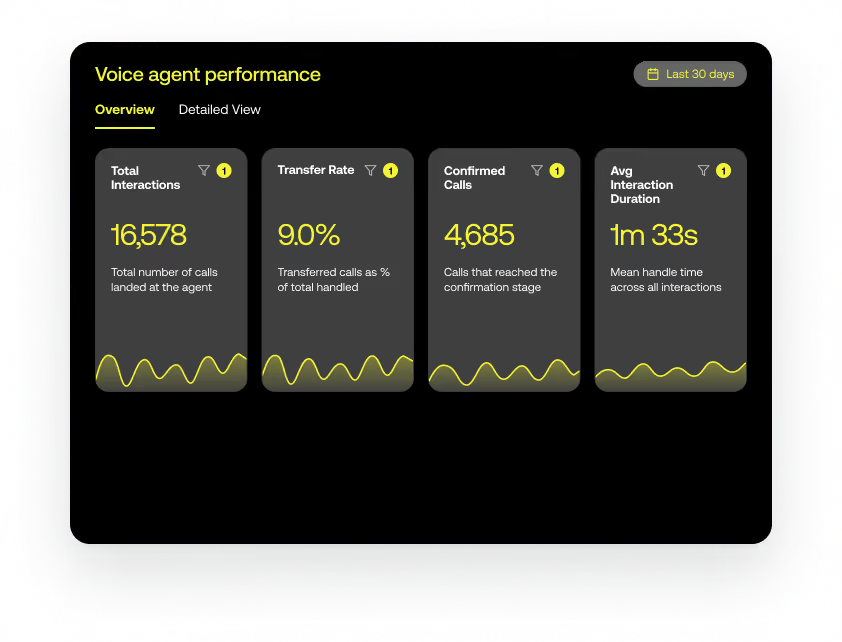
When leadership asks whether the update actually lifted containment or cut handle time, you have the answer — not a hunch. Agentic Analytics compares the KPIs that matter side by side across agent versions, so improvement is always provable.
Version-level KPIs. Containment, handle time, transfers, andconversion — broken out per release, not buried in broad averages.
Side-by-side comparison. See exactly what changed betweenv13 and v14 across every metric — before you commit to 100%.
Anomaly tracing. A dip in any metric links straight back to theversion, workspace, and change behind it.
Move fast on production AI – without ever losing control
See how Agent Harness brings inspection, precise deployment, and instant rollback to the teamsclosest to your customers.