AI Guidance for the Moments That Matter Most: Introducing Companion Agent
Customer experience has always depended on the people closest to the customer.
The frontline team is the person who hears the frustration, answers the urgent question, explains the policy, de-escalates, fixes the issue, and often turns a difficult moment into a better one.
For years, technology has tried to help them do that work. Contact centers invested in knowledge bases, scripts, QA tools, workforce platforms, routing systems, agent desktops, coaching programs, and real-time assist.
All of those tools had value. But they also created a familiar reality for frontline teams.
Frontline teams are expected to listen carefully as they search across systems. They are expected to show empathy while following compliance steps. They are expected to resolve complex issues while documenting every detail. They are expected to move quickly without missing policy requirements. They are expected to deliver a personal experience while navigating tools that were never designed to work together.
That is a lot to ask of any person.
And the job is getting harder.
As AI begins resolving more routine customer interactions, the work that reaches the frontline team is changing. It is often more complex, more emotional, more urgent, or more nuanced. These are the interactions where customers need judgment. They need empathy. They need someone who can understand the gray area.
But those are also the interactions where frontline teams need better support.
The future of customer service is not a choice between AI agents and humans. It is a new model where AI works alongside people, taking on the repetitive, administrative, and procedural work around the interaction, so humans can focus on the moments where they create the most value.
That is why we built Companion Agent.
Today, Observe.AI is launching Companion Agent, our new AI Agent for Frontline Teams. Companion Agent works with frontline support or sales teams before, during, and after every customer interaction, helping them prepare, respond, take action, and complete work with more consistency and speed.
This is an important expansion of the Observe.AI Agentic CX Platform, which brings together AI Agents for Customers, AI Agents for Frontline Teams, and AI Agents for Operations into one connected system.
Companion Agent is built for the frontline reality of modern customer experience.
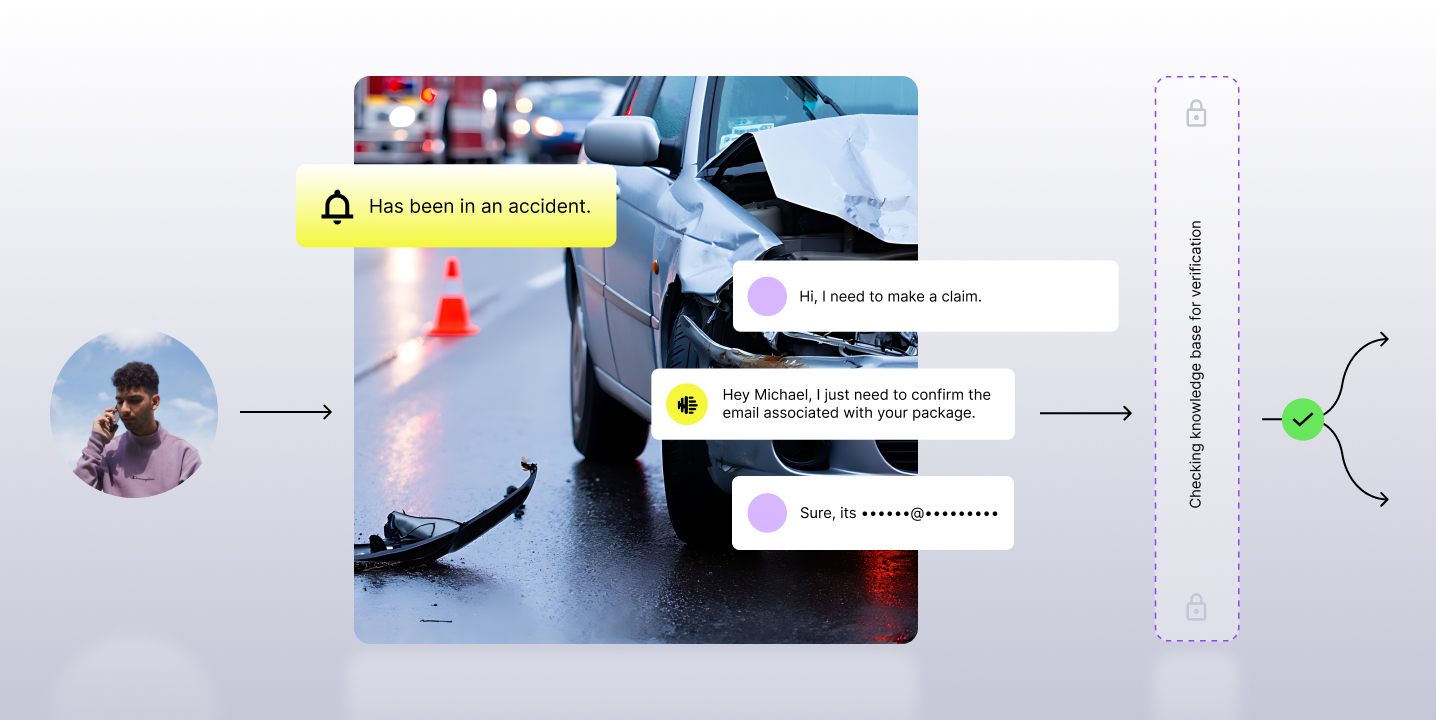
Before a call begins, Companion Agent helps agents understand who they are speaking with and why the customer may be reaching out. It can surface prior interaction history, stated intent, customer profile details, and relevant context so the agent does not start the conversation cold.
During the call, Companion Agent listens in real time. It understands what is happening in the conversation and provides guidance based on the context of the interaction. That could mean prompting the agent through required compliance steps, surfacing the right knowledge article, detecting a behavioral cue, recommending a softer response, or triggering a workflow in another system.
After the call, Companion Agent helps close the loop. It can generate editable summaries, extract key information, classify dispositions, update systems of record, trigger follow-up actions, and identify coaching opportunities.
The point is not to give agents more information to manage.
The point is to reduce the burden around the interaction so they can stay focused on the customer.
This is where traditional agent assist tools have fallen short.
Many real-time assist tools were designed around rigid rules, narrow intent detection, or static guidance. They could surface a script or suggest a knowledge article, but they were often difficult to configure, hard to maintain, and disconnected from the actual work agents needed to complete.
In practice, that meant teams spent months setting up guidance that could become outdated as soon as a policy changed, a new product launched, or a process evolved.
Companion Agent is built on the same agentic architecture that powers the broader Observe.AI platform. Teams can configure guidance in plain English. They can adjust prompts and workflows quickly. They can improve the experience as policies, customer needs, and business priorities change.
That speed matters.
Frontline support is not static. The best teams are constantly learning from customer conversations, updating processes, coaching employees, and improving how work gets done. Companion Agent gives them a way to bring that learning back into the live interaction much faster.
It also connects the frontline to the rest of the customer experience lifecycle.
When an AI Agent for Customers hands off to a human, the Companion Agent can carry forward the context. The frontline teammate can see what happened, what the customer needs, what was already attempted, and what should happen next.
That changes the handoff experience.
Instead of asking the customer to repeat themselves, the frontline teammate can pick up where the AI Agent left off. Instead of losing context between systems, the team can preserve continuity across the journey.
Companion Agent also connects with AI Agents for Operations. That means leaders can evaluate performance, identify coaching opportunities, monitor adherence, and continuously improve frontline execution across every interaction.
This is the larger shift we are building toward.
Customer experience should not be a set of disconnected moments. It should be a coordinated system in which AI agents resolve routine issues, provide guidance during complex interactions, and help leaders improve performance over time.
Companion Agent is how that system comes to life for frontline teams.
It helps new frontline team members ramp faster. It helps experienced teammates stay consistent. It helps supervisors coach based on what is actually happening in conversations. It helps operations teams turn insights into action. Most importantly, it helps customers get better service from people who are more prepared and better supported.
For the employees, that can mean fewer missed steps, less after-call work, and less time searching for answers.
For the business, that can mean lower average handle time, stronger first-call resolution, better compliance adherence, and higher customer satisfaction.
But the larger impact is more human than operational.
Contact center work is demanding. Frontline employees are asked to manage pressure from all sides: customer emotions, performance metrics, compliance risk, changing policies, and fragmented systems. When AI can take on more of the surrounding work, the human role becomes clearer.
Listen. Understand. Solve. Reassure. Decide when judgment matters.
That is the work humans are best at.
Companion Agent is not designed to replace that. It is designed to protect it.
This launch represents an important step in our platform vision. AI Agents for Customers automate work directly for customers. AI Agents for Frontline Teams support the people handling higher-value interactions. AI Agents for Operations evaluate, coach, and improve performance at scale.
Together, they create a new operating model for customer experience.
One where automation does not leave humans behind.
One where frontline teams are not expected to carry complexity alone.
One where every conversation can be supported by context, guided by intelligence, connected to action, and improved over time.
That is what Companion Agent brings to the frontline. And that is the future we are building at Observe.AI.
Subscribe to our newsletter.
Frequently Answered Questions


.png)
.png)