Building a More Efficient Customer Journey: How Insurance Leaders Are Transforming Claims Operations
Customer expectations have evolved. They don’t just want their claims handled quickly—they want the entire experience to feel effortless. From the moment they file a claim to the final resolution, every interaction should be clear, consistent, and thoughtful. Yet many insurance operations remain fragmented, with adjusters working across disconnected systems, limited visibility into what’s happening on each call, and customers frustrated by inconsistent communication.
The question insurance leaders are asking isn’t “Can we handle more volume?” It’s “Can we create a customer journey so efficient that every interaction builds trust?” The answer is yes—and forward-thinking carriers are already proving it.
The Anatomy of an Inefficient Journey
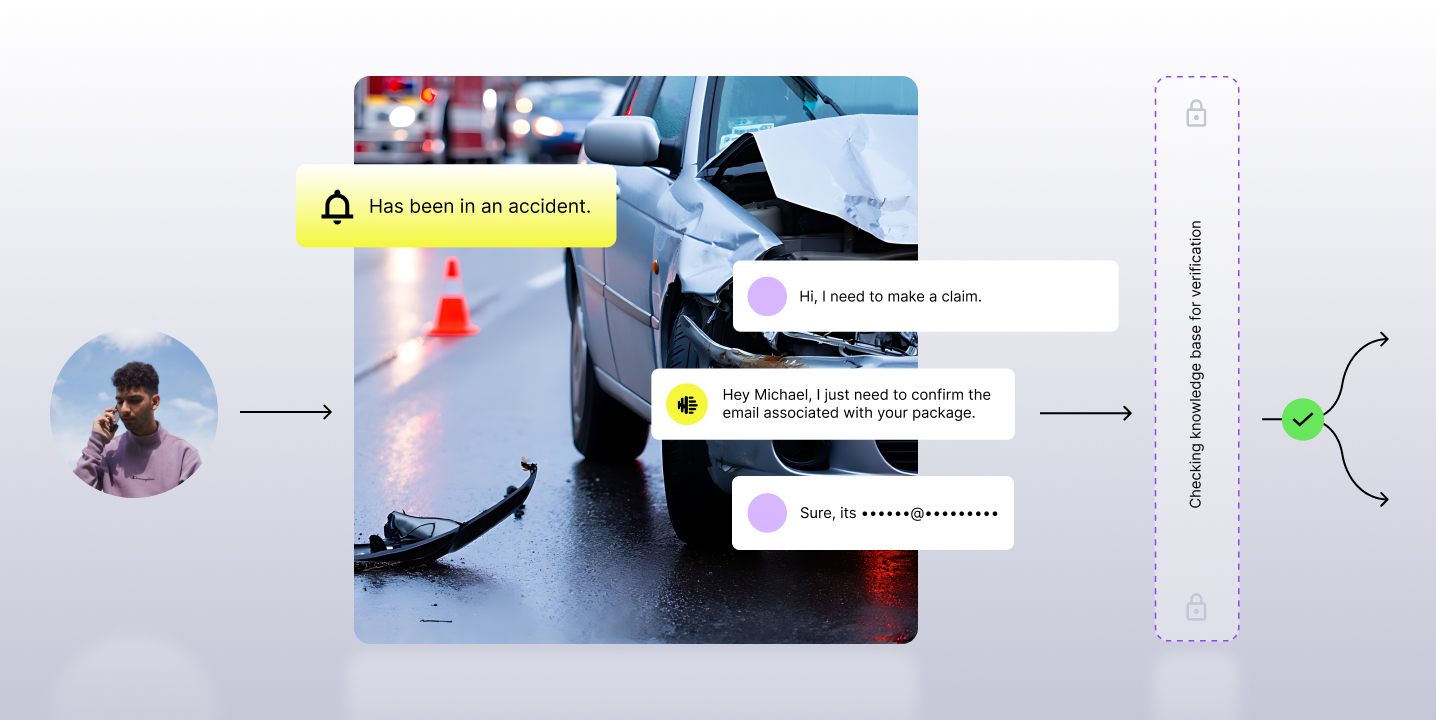
A fragmented customer journey typically looks like this: A policyholder files a claim. The system routes it to an adjuster who must manually gather information across multiple platforms. Documentation is inconsistent. The customer is transferred between departments. Days pass before they get a meaningful update. When they finally hear back, the explanation is unclear, and they don’t understand the next steps. The whole experience feels disorganized and slow.
This inefficiency isn’t accidental—it’s structural. Legacy systems weren’t designed for modern customer expectations. Adjusters are doing their best, but they’re working within constraints that make delivering excellent service nearly impossible. The result is customers who feel undervalued, adjusters who feel unsupported, and claims operations that can’t scale.
Learning from Industry Leaders: Real Results
Some of the most forward-thinking insurance carriers have made the leap to intelligent, customer-centric operations. Their results offer a roadmap.
Trupanion, a pet insurance provider, faced a familiar challenge: limited quality assurance coverage meant only a handful of customer interactions were being reviewed, and supervisors were spending valuable time hunting for calls instead of coaching their team. By implementing AI-powered Conversational Intelligence and Auto QA across every conversation, Trupanion transformed their operation. They achieved a 5% increase in customer retention rates and now have 100% visibility into interactions across support teams. That visibility enabled targeted coaching and revealed patterns that drove improvements in empathy and clarity. For Trupanion, full-coverage analytics wasn’t just a reporting tool—it became the foundation of a better customer experience.
American National Insurance took a different approach but achieved similar transformation. The carrier shifted from manual QA reviews—which only covered a handful of calls—to fully automated quality assurance and insights. They now analyze over 1 million calls per year. Every customer call is evaluated and scored. Leaders have full visibility into what’s working and what isn’t. The result: 100% of customer calls are now evaluated and scored, freeing supervisors from tedious manual reviews so they could focus on targeted coaching. Across their contact center, they achieved 90% efficiency gains for coaches and trainers, and improved consistency across more than 200 agents.
Both carriers share a common insight: building an efficient customer journey starts with visibility. You can’t improve what you can’t see. And you can’t scale excellence without understanding what excellence looks like across your entire operation.
From Visibility to Transformation
An efficient customer journey requires three components working together.
An efficient customer journey requires three capabilities working in concert. Automation should handle the predictable, repetitive parts—when AI Agents answer routine questions like “What’s my claim status?” or “Can I update my policy?” or “What documents do I need to submit?”, adjusters are freed from intake and status work. Customers get instant answers 24/7, and the experience feels faster and more responsive.
Equally important is real-time guidance during human interactions. An AI Copilot listens to calls in the moment, flagging missed disclosures, coaching on empathy, and ensuring every customer receives the same level of care. The adjuster knows they have support, the customer experiences consistency, and the company reduces compliance risk.
Finally, full-coverage visibility into every interaction—through Conversational Intelligence—reveals the truth about what’s happening in your operation. Rather than sampling 1-2% of calls, this approach analyzes all of them, enabling supervisors and leaders to make decisions based on data, not assumptions. It drives targeted coaching, surfaces opportunities to simplify processes, and creates a feedback loop where every interaction makes the operation smarter.
Why Efficient Journeys Build Customer Loyalty
An efficient claims journey transforms multiple dimensions of the customer and business experience simultaneously. First, cycle times shrink dramatically. When documentation is complete and accurate from the start, and adjusters have real-time support to navigate each interaction confidently, approvals move faster and customers get answers sooner.
Beyond speed, customers experience a fundamentally different level of service. They receive clear communication about what’s happening and why. They understand the timeline. When issues arise, the adjuster has full context and can explain things clearly. This clarity builds trust—satisfied customers become loyal customers who are more likely to renew and recommend.
For adjusters themselves, the impact is equally significant. They’re no longer struggling to find information or second-guessing compliance decisions. They’re supported in the moment, coached on empathy, and equipped to deliver great service. The combination of real-time guidance, full visibility, and automation reduces complexity, builds confidence, and drives engagement. Turnover decreases. Efficiency increases.
The carriers achieving these results didn’t start with a complete overhaul. They started with visibility. They implemented AI-powered analytics to understand what was really happening. They used that clarity to pilot real-time coaching. They introduced automation for high-volume, routine interactions. Each step built on the previous one, creating a virtuous cycle where the operation became smarter and more efficient.
Building Your Efficient Journey
Creating an efficient customer journey isn’t theoretical—it’s achievable. It starts with a clear-eyed assessment of where you are, a willingness to embrace new approaches, and the right technology partner to guide the transformation.
The carriers leading the industry aren’t waiting for market conditions to improve. They’re proactively redesigning their operations to deliver the customer experience today’s policyholders expect. They’re using AI not to replace human judgment but to enhance it—freeing adjusters to focus on complex claims that need human expertise, while automation and real-time coaching handle the rest.
Your customers don’t just want efficiency. They want to feel valued and supported during stressful moments. An efficient journey isn’t about cutting corners—it’s about removing friction so that every interaction delivers clarity, consistency, and care.
Ready to Eliminate the Bottlenecks Slowing Your Claims Operation?
Insurance leaders who have transformed their claims operations share a common starting point: they understood that claims processing is really customer experience management. Every bottleneck in the process is a moment where a customer feels frustrated. Every improvement in efficiency is a moment where a customer feels cared for.
Our ebook, Clearing Bottlenecks in Claims Operations, walks you through the specific operational challenges that slow claims processing, create inconsistency, and strain your teams. You’ll discover where bottlenecks hide in fragmented systems, why unified approaches work better than replacing legacy infrastructure, and how leading carriers are using coordinated systems to break through the operational ceiling.
Whether you’re focused on reducing claims cycle times, improving compliance consistency, or building adjuster confidence, this guide provides actionable insights and a framework for transformation.
Download the ebook today and discover how to build the efficient, customer-centric claims operation your members deserve.
Subscribe to our newsletter.
Frequently Answered Questions